
Heritage Modular: the revival of modular synthesis
In April 2026, at the Printemps de Bourges, the artist DeLaurentis presented its creation Pionnières, devoted to women who have deeply marked the history of electronic music. The stage, organized like a laboratory, was populated by period musical instruments, like the ARP-2500, but also with more modern machines. Heritage Modular, a synthesizer imagined and built in an artisanal way by Frederic Rible In his garage in Orsay, naturally found its place there. He extended in its own way the legacy of those who brought so much to electronic music: new gestures, new sounds and new ways of composing.
Thought for the stage and endowed with a unique expressiveness, this instrument revealed all its magic during this concert. The finesse of DeLaurentis gesture seemed to extend into the sound material, as if the machine responded to the artist with its own voice. The superb lead evoked the textures of the string instruments, while the arpeggio slid from hushed sounds to brighter bursts, according to the inflections of the musical line.
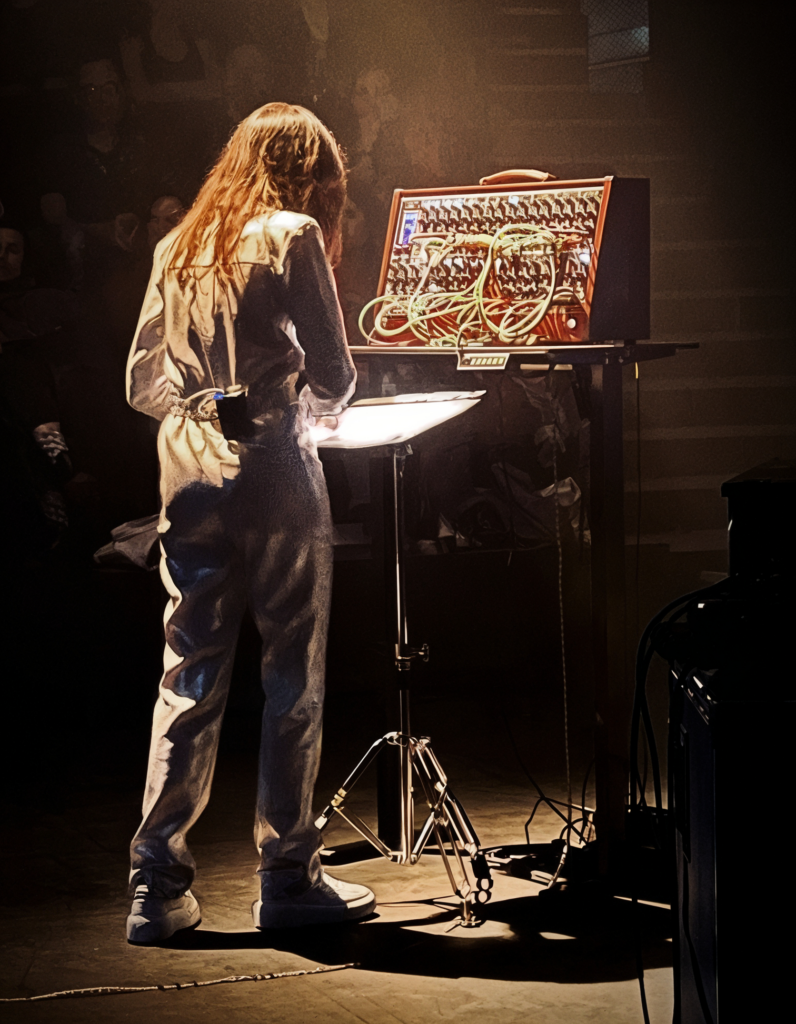
This is the result of six years of work, during which Frederic alone ensured the design and development of this instrument.
Pionnières -Tribute to Suzanne Ciani
Heritage Modular was born from his fascination for modular synthesizers, these great electronic instruments invented by pioneers like Bob Moog and Don Buchla in the 1960s and 70s, then popularized by artists like Wendy Carlos, Suzanne Ciani and Jean-Michel Jarre. Thanks to the capabilities offered by synthesizers in their time, these artists were able to sculpt sound, explore and compose in a completely new way.
In 2020, the project has its source in Frederic’s desire to rediscover and share this instinctive relationship with sound, as already allowed by these instruments, while being part of modernity with more contemporary functions. The designer was also looking to take up the old aesthetic codes: quality cabinetmaking, noble materials and a visual identity that underlines its filiation.
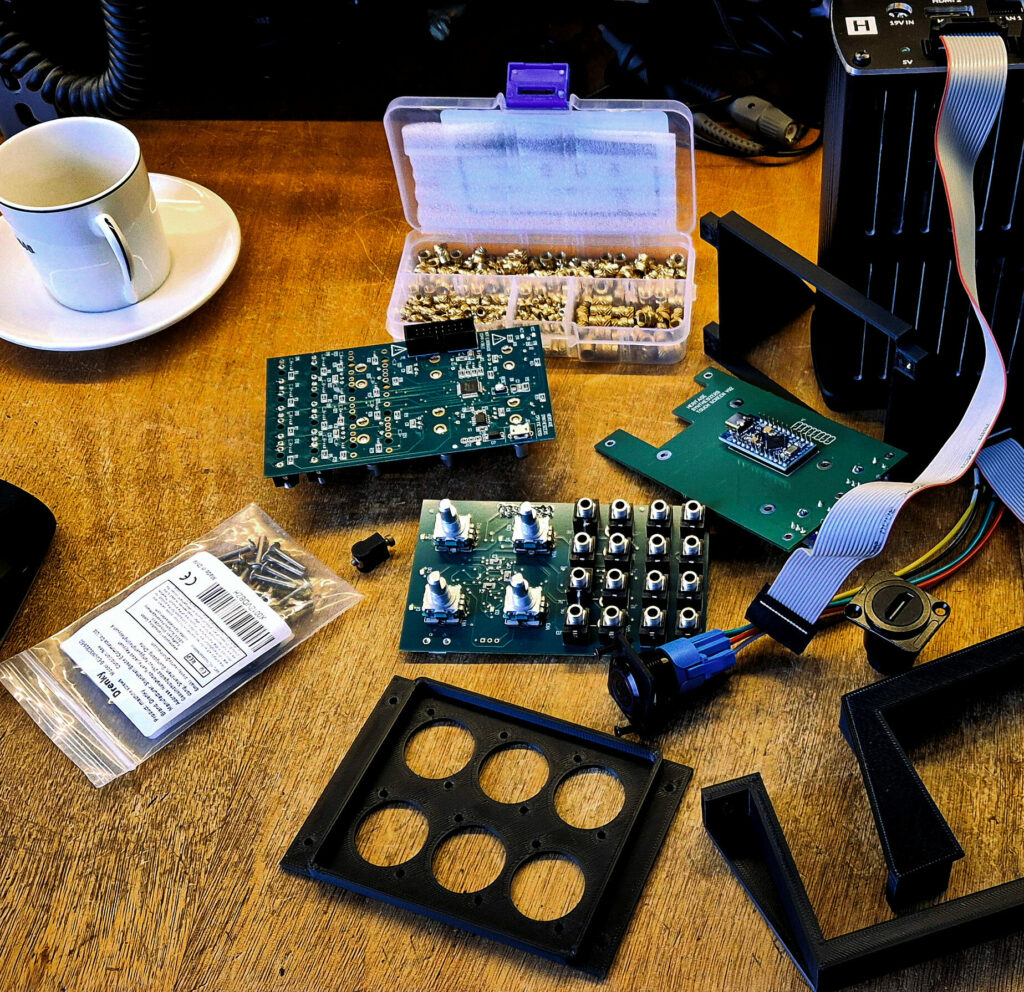
The other essential dimension of the project lies in its artisanal manufacture: the instrument was entirely designed and built in a garage. 3D printing, CNC machining, laser engraving, electronic welding, woodworking. The tools and know-how typical of the fablabs (workshops open to the public) have made it possible to gradually transform an intention into a real musical instrument.
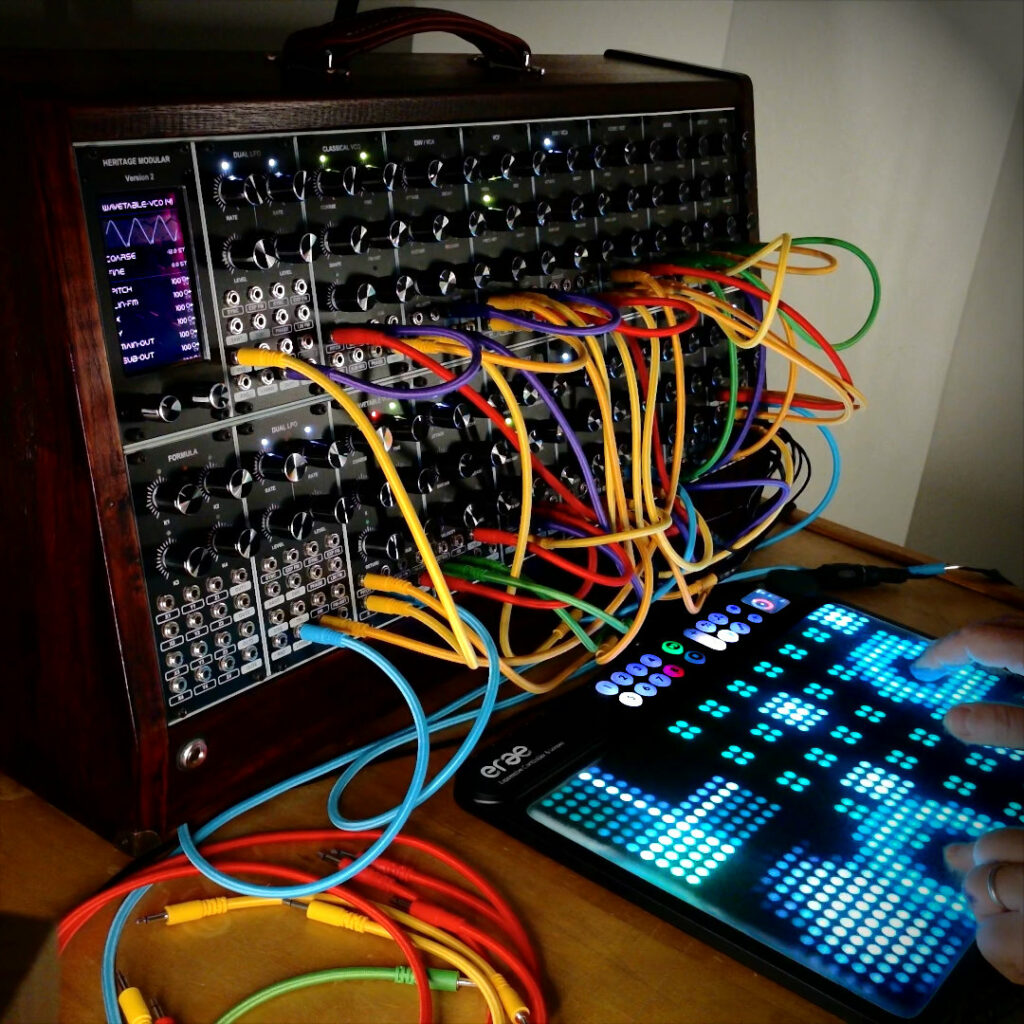
This adventure was also based on many sources of inspiration: forums, technical documentation, but also the book Les fous du son by Laurent de Wilde, which traces the fascinating history of synthesizers and their inventors. Exchanges with members of FabLabs, notably in Orsay, and in Nanterre with Electrolab, played an essential role: advice, discussions, trials, errors and successive improvements accompanied the maturation of the project.
Artists, met during the Synthfest France, like DeLaurentis, Michel Geiss, Kurtz Mindfields, Olivier Delevingne, Freddy Angel, Tristan Bres, s3bzHack, Clawz SG, Almost Random, Adnz, Eric Bouzille and so many others, played a decisive role in this adventure. Using the instrument, by listening, and by sharing their impressions, they helped guide its development. Thanks to their gaze and their musical sensitivity, the project has gone beyond the simple construction of a machine. Its become a real creative tool, capable of inspiring them and accompanying their expression.
This original instrument supports an innovative design, combining a modern digital core with a set of modules playing the role of user interface. Use of patch cables, buttons and lights includes the codes of vintage modular synthesizers. The musician whose culture it is thus very quickly regains his bearings and can design new sounds as he would with a machine from the 70s. The synthesis and audio processing engine was developed in Pure Data, a real-time graphical programming environment created by the researcher Miller Puckette in the 1990s. It took several years of work to Frederic to transform this software base into a complete, stable and stage-adapted instrument. He paid particular attention to the quality of the sound, with the will of approaching the analog ‘grain’, so much appreciated by the enthusiasts of electronic music.
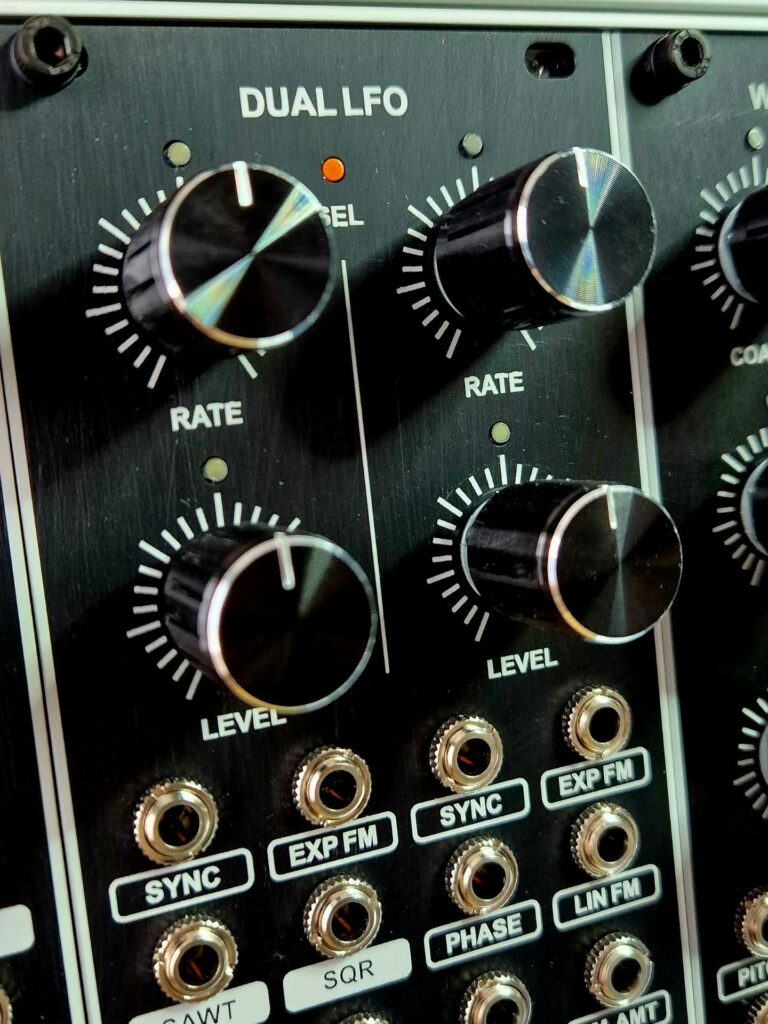
Each module has a black anodized aluminum front panel, cut by a numerically controlled machine. The legends are obtained by blue laser engraving. The final rendering is close to that of the synthesizers of the time. The naming of the connectors and buttons required several iterations in order to make them easy to use.
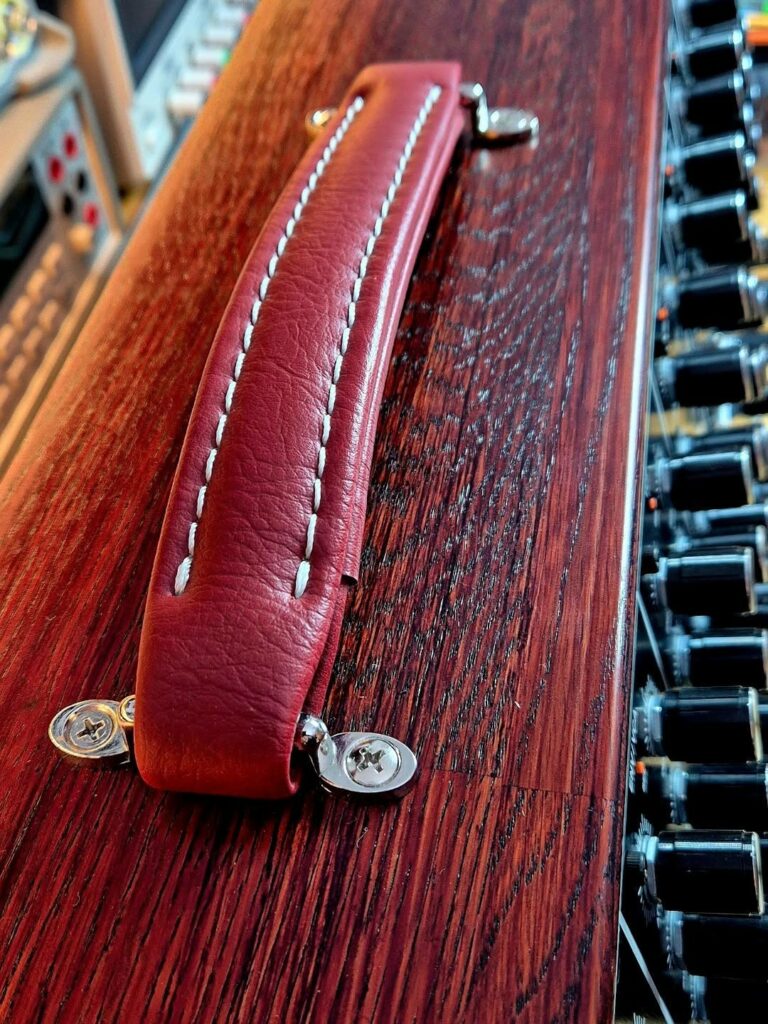
Cabinetmaking also made the object of many attention: the case is made of solid oak, with assemblies obtained by numerical control milling. The treatment of wood with multiple layers of antique stain and a wax finish give it this high-end look. The leather handle, signature of stage equipment, brings the final touch.
Use of digital technologies makes possible rare functions for this type of synthesizer: memorizing settings, including cable connections, advanced polyphony and expressiveness with the MIDI MPE standard. Unlike vintage machines from the 70s, which were quite limited, this instrument is lively and scalable: each version of the software brings new possibilities, chosen according to the needs expressed by the users. This is how advanced functions have been developed for the show Pionnières.
This adventure continues with the construction of several copies of this magnificent synthesizer, still at the craft scale. New concerts are planned in the coming months, where we will have the pleasure of listen it again on stage.
This project shows that with passion, perseverance and a caring community, it is possible to create a complex and ambitious object in a garage or a fablab. It fully illustrates the Maker spirit: learning by doing, sharing experiences and gradually transforming a personal idea into a living object. This project reminds us that technology can become a real means of expression at the service of artistic creation.
I express a very special thought and my most sincere thanks to DeLaurentis, who offered this instrument the emotion and light of its first big stage.
Frederic Rible
https://www.heritagesynthesizers.fr/